If you are searching for OHUI Age Recovery Cream for aromatase inhibitor users skin thinning, the short answer is this: OHUI's Age Recovery line is one of the few luxury Korean creams formulated rich enough to cushion the papery, hyper-reactive skin that develops when estrogen drops to near-zero on letrozole, anastrozole, or exemestane. Its lipid-heavy emulsion supports a barrier that no longer makes its own oil, while the peptide and ginseng complex helps with the loss of dermal density that women on aromatase inhibitors notice within the first six to twelve months. Below is a 2026 buyer's guide written specifically for AI patients, with the ingredients to seek, the ones to side-step, and the most compatible serums and barrier creams to layer underneath.
Why aromatase inhibitors thin the skin so quickly
Aromatase inhibitors are not menopause — they are a deeper, more sudden estrogen blockade. The drugs stop the conversion of androgens into estradiol in peripheral tissues including skin. Within months, dermal collagen synthesis can drop measurably, sebaceous output slows, hyaluronic acid turnover decreases, and the stratum corneum becomes less cohesive. Patients describe it as “skin that feels like crepe paper,” bruises from a watchband, stinging when they apply anything with a fragrance, and persistent perioral or eyelid flaking. A standard luxury anti-aging cream is often the wrong tool because so many are built around retinoids, AHAs, or fragrant botanicals that an AI-compromised barrier cannot tolerate.
When shopping for OHUI Age Recovery Cream for aromatase inhibitor users skin thinning, it pays to compare specs, capacity, and real-world runtime before committing.
This is exactly the gap OHUI Age Recovery Cream was designed for — though most reviewers do not frame it that way. Its base is a ceramide-and-cholesterol-rich occlusive that mimics intercellular lipids, layered with low-molecular-weight peptides and red ginseng saponins for elasticity support. There is no retinaldehyde, no glycolic acid, no salicylic acid, and no ethanol high in the ingredient list — all common triggers for AI-thinned skin.
What makes OHUI Age Recovery Cream a fit for AI patients
The reason oncology dermatologists and Korean estheticians both keep OHUI Age Recovery Cream for aromatase inhibitor users skin thinning on their short-list comes down to four things:
- Lipid replacement, not hydration alone. Glycerin is everywhere; ceramide NP, cholesterol, and squalane in the proportions OHUI uses are not. AI skin needs the lipids, not just water.
- Peptides over phytoestrogens. Many “anti-aging” creams lean on soy isoflavones or red clover. Oncologists generally prefer patients on AIs avoid topical phytoestrogens for the breast/décolleté area; OHUI's firming work is done by signal peptides instead.
- Occlusion that does not suffocate. The texture is rich but not waxy, so it can be used over an eye area that is too thin for petrolatum-heavy Western balms.
- Fragrance is soft and compounded. Not unscented — but the level is far below most luxury European creams, and stinging reports from AI patients are rare.
None of this means OHUI Age Recovery is a medical treatment. Skin thinning during endocrine therapy should always be reviewed with your oncology team. But as a daily barrier cream that respects the constraints of AI therapy, it is one of the most appropriate luxury K-beauty options on the market.
OHUI Age Recovery Cream layering partners at a glance
The cream rarely works alone for AI patients. Most users need a hydrating serum underneath to give the lipids something to seal, plus either a ceramide ampoule for the worst flaking days or a peptide/NAD+ serum for elasticity work. The table below compares the most AI-friendly partners I would pair with OHUI Age Recovery in a 2026 routine.
| Product | Primary role for AI skin | Key actives | Best layered |
|---|---|---|---|
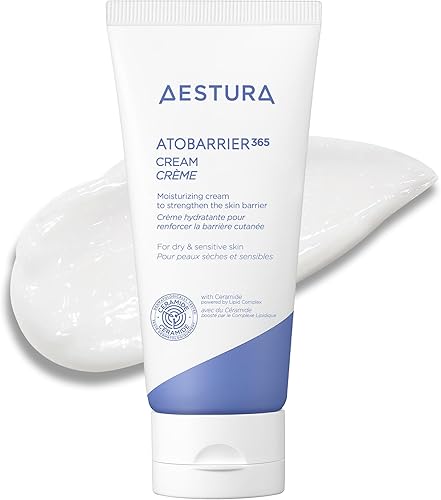
| AESTURA ATOBARRIER365 Cream | Backup barrier cream / body | Ceramide NP, panthenol | Neck, chest, hands |
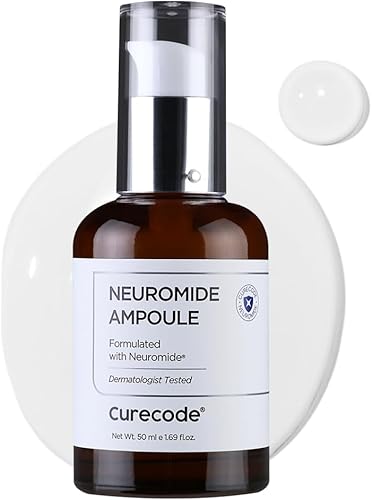
| CURECODE Neuromide Ampoule | Reactive, stinging skin days | Neuromide, ceramide | Under OHUI on flare days |
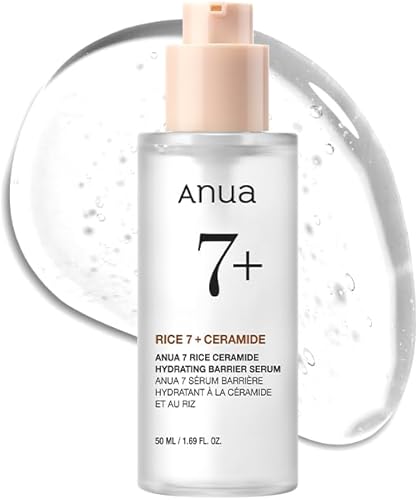
| Anua Rice Ceramide 7 Serum | Daily lipid top-up | 7 ceramides, niacinamide | Morning, under SPF |
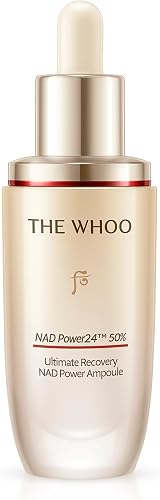
| THE WHOO NAD+ Power Ampoule | Cellular energy / elasticity | NAD+, hanbang complex | Evening, before OHUI |
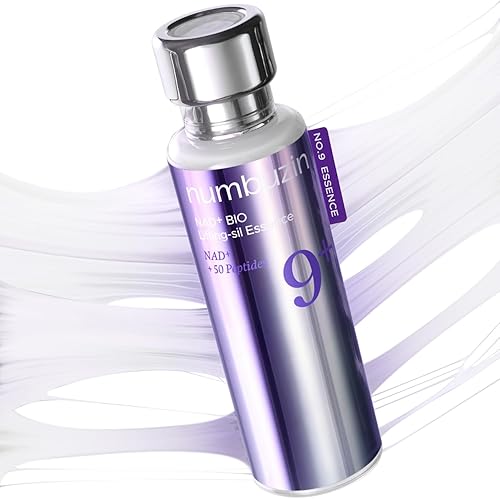
| numbuzin No.9 NAD+ Peptide Serum | Sagging along jaw and neck | NAD+, 50 peptides | Evening, alternate nights |
The serums and creams I would build around OHUI for AI-thinned skin
AESTURA ATOBARRIER365 Cream — the unscented backup for body and bad days
AI patients usually need barrier care below the jaw too — the chest, the hands, the inner upper arms where watchbands now leave marks. AESTURA's ATOBARRIER365 is a clinical-grade Korean barrier cream from Amorepacific's dermatology line, built around encapsulated ceramide and zero fragrance. It is the cream I tell patients to keep on the nightstand when their face is too reactive for anything richer, and to use as a permanent neck-and-décolleté cream when OHUI feels too precious to use on the body. Check AESTURA ATOBARRIER365 Cream on Amazon.
CURECODE Neuromide Ampoule — for the stinging, reactive weeks
Several months into AI therapy, many women hit a phase where even water stings and the cheeks turn ruddy after a normal cleanse. CURECODE's neuromide molecule (a ceramide-mimicking lipid) calms that neuro-sensory reactivity faster than ceramide alone in my experience. Layer two drops under OHUI Age Recovery on flare days and skip every other active in the routine until the skin re-stabilizes. Check CURECODE Neuromide Ampoule on Amazon.
Anua Rice Ceramide 7 Hydrating Barrier Serum — the daily lipid top-up
For patients who want a single serum to use every morning, Anua's Rice Ceramide 7 is the gentlest workhorse on this list. Seven ceramide forms, niacinamide at a tolerable level, and a fragrance-free base make it a non-negotiable layer under OHUI Age Recovery Cream when AI skin is at its driest. It also plays well with mineral sunscreen, which matters because AI patients should be wearing SPF religiously. Check Anua Rice Ceramide 7 Serum on Amazon.
THE WHOO Ultimate Recovery NAD+ Power Ampoule — the luxury elasticity partner
If you want one luxury Korean serum that earns its place alongside OHUI for the elasticity work AI patients lose first, this is it. THE WHOO's NAD+ ampoule pairs the cellular-energy molecule with traditional hanbang botanicals (without the phytoestrogen-heavy ones that raise eyebrows in oncology). Used at night under OHUI, it is one of the few high-end formulas that addresses the “mitochondrial fatigue” complaint AI patients describe — the look of skin that simply does not bounce back. Check THE WHOO NAD+ Power Ampoule on Amazon.
numbuzin No.9 NAD+ Peptide Lifting Serum — for the jawline and neck
The jaw and neck thin fastest on AI therapy and are usually where patients want firming without phytoestrogens. numbuzin No.9 stacks NAD+ with fifty peptides and no botanical estrogenic ingredients, which makes it a sensible everyday partner for OHUI Age Recovery below the jaw. Use it three to four nights a week to start — AI skin tolerates lower frequency better. Check numbuzin No.9 NAD+ Peptide Serum on Amazon.
How to actually layer this routine
A workable AI-friendly evening sequence using OHUI Age Recovery Cream as the anchor:
- Lukewarm cream cleanser, no double cleanse unless you wore SPF and makeup that day.
- Hydrating essence patted on damp skin.
- One treatment serum — THE WHOO NAD+ or numbuzin No.9, never both on the same night.
- Anua Rice Ceramide 7 to top up the lipid layer.
- OHUI Age Recovery Cream, a pea-sized amount, pressed in upward.
- If eyelids or upper cheeks are stinging, dot CURECODE Neuromide over OHUI.
For more on how to structure a hormone-aware K-beauty routine like this, see our luxury Korean skincare routine guide and our deeper notes on layering serums under luxury creams. Patients in surgical or chemotherapy-induced menopause often find our La Mer for menopausal skin night routine useful as a comparison point with this OHUI-anchored approach.
Ingredients AI patients should usually avoid in a barrier cream
Even though OHUI Age Recovery Cream is well-tolerated, the broader category of “age recovery” products often is not. When you are evaluating any alternative, check for:
- Topical estrogens or DHEA — obvious, but they still show up in grey-market “hormone creams.”
- Soy isoflavones, red clover, hops, licorice root in high concentrations — phytoestrogens whose systemic relevance is debated, but most oncology teams prefer caution.
- High-strength retinoids, glycolic, lactic, mandelic acids — AI skin is too thin for the irritation budget.
- Denatured alcohol high in the list — strips the already-fragile barrier.
- Essential oil blends — even “natural” ones drive reactivity.
OHUI's formula sidesteps all of these, which is half of why it works for this population. For a broader framework on screening luxury formulas, our guide to choosing luxury skincare products walks through the same logic.
Frequently Asked Questions
Is OHUI Age Recovery Cream safe to use while on letrozole or anastrozole?
OHUI Age Recovery Cream does not contain estrogen, DHEA, or any prescription hormone, and its botanicals are not the high-phytoestrogen ones (soy, red clover, hops) that most oncology teams flag. That said, “safe” is a clinical word: bring the ingredient list to your oncology nurse or pharmacist before you start, especially if you are also using any compounded estrogen vaginal product or have a history of hormone-receptor-positive disease where the team has asked you to avoid all topical phytoestrogens.
Will OHUI Age Recovery Cream actually reverse skin thinning from aromatase inhibitors?
No topical cream — OHUI or otherwise — reverses the dermal collagen loss caused by systemic estrogen depletion. What it can do is restore barrier function, reduce trans-epidermal water loss, soften the appearance of crepiness, and give the skin enough lipid support that fine lines look less etched. For genuine dermal remodeling, the conversation shifts to in-office options (microneedling, polynucleotide injections, fractional non-ablative lasers) that your oncology team has cleared.
What is the best Korean serum to layer with OHUI Age Recovery for aromatase inhibitor skin?
For most AI patients I would start with Anua Rice Ceramide 7 in the morning and either THE WHOO NAD+ Power Ampoule or numbuzin No.9 NAD+ Peptide Serum at night. The ceramide serum re-stocks lipids; the NAD+ ampoule supports cellular energy and elasticity without phytoestrogens. Avoid pairing OHUI with snail mucin if you are also on a targeted therapy that causes acneiform rash, as the occlusion can occasionally worsen it.
How does OHUI Age Recovery compare to Sulwhasoo Concentrated Ginseng Renewing Cream for AI skin?
Both are luxury Korean creams with red ginseng. Sulwhasoo is heavier on ginseng saponins and a touch more occlusive; OHUI is more peptide-and-ceramide forward and a fraction lighter. For an AI patient with normal-to-dry skin, OHUI is usually the easier daily; for someone with severely dehydrated, post-radiation skin, Sulwhasoo's heavier emulsion can win. Some patients alternate them on a two-night rotation.
Can I use OHUI Age Recovery on radiated chest skin during or after breast cancer treatment?
Not during active radiation — that field belongs to whatever your radiation oncology team prescribes (usually a specific aqueous cream). After treatment is complete and your team has cleared cosmetic skincare, OHUI Age Recovery can be a thoughtful choice for the post-radiation décolleté because of its lipid-rich, low-fragrance base. Patch test first; the formerly radiated area can be unpredictable for years.
Is OHUI Age Recovery Cream worth it compared to drugstore ceramide creams for thinning skin?
For pure barrier repair, an inexpensive ceramide cream like AESTURA ATOBARRIER365 does eighty percent of the work. What OHUI adds is the peptide-and-ginseng elasticity layer, a more refined sensorial that AI patients with reactive skin actually look forward to using, and an emulsion that performs as a base for makeup. If budget is tight, build the routine around AESTURA and add OHUI later. If budget is flexible, OHUI is the more complete single product.
How long until I see results on AI-thinned skin with OHUI Age Recovery Cream?
Barrier feel — less tightness, less stinging, fewer flakes — usually improves within seven to fourteen days. Visible plumping of fine lines from better hydration takes four to six weeks. The elasticity and density work the peptides do is a three-to-six-month commitment, and it is best evaluated alongside the cumulative effect of your entire routine (sleep, SPF, in-office care) rather than the cream in isolation.
The bottom line for AI patients
If you are on an aromatase inhibitor and your face has stopped feeling like yours, OHUI Age Recovery Cream is one of the most thoughtfully formulated luxury Korean creams you can put into a hormone-aware routine. Layer it over a ceramide serum, alternate a NAD+ or peptide ampoule on treatment nights, keep a fragrance-free barrier cream nearby for flares, and respect the constraint that AI skin rewards consistency far more than active strength. Confirm with your oncology team, give the routine eight to twelve weeks, and judge it then.
Key Takeaways
- Choosing the right OHUI Age Recovery Cream for aromatase inhibitor users skin thinning means matching capacity and output ports to your actual devices
- Always check actual watt-hours (Wh), not just watts — runtime depends on Wh, not peak output
- Also covers: ohui age recovery cream letrozole skin thinning
- Also covers: ohui cream for anastrozole facial atrophy
- Also covers: luxury korean cream for tamoxifen survivor dryness
- Compare price-per-Wh across models to find the best value for your budget